Monday, 20 May 2019

Organizing Committee Member - Material Science 2019

We embrace our Organizing Committee Member Dr. Mohammad Hassan for our forthcoming Gathering on Material Science 2019 which fitting to be held in Rome, Italy during July 22-23, 2019.

Talk On: Thin-film membranes made from rice straw nanofibers isolated from high-lignin neutral sulfite pulp and bleached sulfite pulp. 


For More Details: https://bit.ly/2CS5Vka

Friday, 3 May 2019

Organizing Committee Members - Material Science 2019

We embrace our Organizing Committee Members for our forthcoming Gathering on Material Science 2019 which fitting to be held in Rome, Italy during July 22-23, 2019.


Organizing Committee http://bit.ly/2H08jsv hashtag


Wednesday, 24 April 2019

Speaker - Material Science 2019

We embrace our Plenary Speaker Dr.Yusran Sulaiman for our forthcoming Gathering on Material Science 2019 which fitting to be held in Rome, Italy during July 22-23, 2019.


Talk On: High performance supercapacitor based on layered polypyrrole/graphene oxide on polypyrrole/manganese oxide

 For More Details: https://bit.ly/2CS5Vka

Wednesday, 27 March 2019

Catalytic Materials for High-Temperature Combustion – Material Science 2019

Catalytic combustion, as an alternative to conventional thermal combustion, has received considerable attention during the past decade. Research efforts have been promoted by the need to meet governmental demands concerning pollution and the wish to use energy sources more efficiently. The two main advantages offered by catalytic combustors over flame combustors apply to these goals:

Catalytic combustion can be carried out over a wide range of fuel concentrations in air and at low temperatures.

These low temperatures result in attaining NO, emission levels substantially lower than possible with conventional combustors.

To know More about Catalytic Materials grab the chance and attend the forthcoming: 6th International Conference on Material Science and Nanotechnology

Dates of the Conference: July 22-23, 2019

Venue: Rome, Italy

For more Details: Material Science 2019

Sunday, 17 March 2019

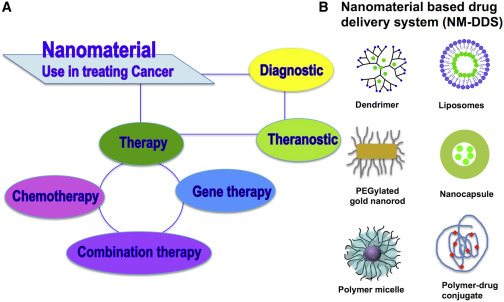
Nanotechnology in Cancer Treatment - Material Science 2019

Nanotechnology cancer treatments may lead to destroying cancer tumors with minimal damage to healthy tissue and organs, as well as the detection and elimination of cancer cells before they form tumors.

Most efforts to improve cancer treatment through nanotechnology are at the research or development stage. However, there are many universities and companies around the world working in this area.

The next section provides examples of the research underway, a few of the methods discussed have reached the pre-clinical or clinical trial stage.


Nanotechnology Cancer Treatments – Nanoparticle Chemotherapy

A targeted chemotherapy treatment under development uses a nanoparticle called CRLX101. The company developing this targeted chemotherapy method is called Cerulean Pharma.

Researchers at the University of Georgia are working on a method to fight prostate cancer. They are using nanoparticles to deliver a molecule called IPA-3 to the cancer cells. In laboratory mice studies the IPA-3 appears to reduce the growth of prostate cancer cells.

Researchers are testing the use of chemotherapy drugs attached to nanodiamonds to treat brain tumors. The nanodiamond/chemotherapy drug combination stays in the tumor longer than the chemotherapy drug by itself, which should increase the effectiveness.

To know More about Nanotechnology grab the chance and attend the forthcoming Conference: 6th International Conference on Material Science and Nanotechnology

Dates of the Conference: July 22-23, 2019

Venue: Rome, Italy

For more Details: Material Science 2019

Monday, 21 January 2019

Nanocomposites, their Uses, and Applications – Advanced Materials 2019

A survey of the applications of nanocomposites:

The following survey of nanocomposite applications introduces you to many of the uses being explored, including:

Producing batteries with greater power output:

Researchers have developed a method to make anodes for lithium-ion batteries from a composite formed with silicon nanospheres and carbon nanoparticles. The anodes made of the silicon-carbon nanocomposite make closer contact with the lithium electrolyte, which allows faster charging or discharging of power.

Speeding up the healing process for broken bones:

Researchers have shown that growth of replacement bone is speeded up when a nanotube-polymer nanocomposite is placed as a kind of scaffold which guides the growth of replacement bone. The researchers are conducting studies to better understand how this nanocomposite increases bone growth.

Producing structural components with a high strength-to-weight ratio:

For example, an epoxy containing carbon nanotubes can be used to produce nanotube-polymer composite windmill blades. This results in a strong but lightweight blade, which makes longer windmill blades practical. These longer blades increase the amount of electricity generated by each windmill.

Using graphene to make composites with even higher strength-to-weight ratios:

Researchers have found that adding graphene to epoxy composites may result in stronger/stiffer components than epoxy composites using a similar weight of carbon nanotubes. Graphene appears to bond better to the polymers in the epoxy, allowing a more effective coupling of the graphene into the structure of the composite. This property could result in the manufacture of components with higher strength-to-weight ratios for such uses as windmill blades or aircraft components.

Making lightweight sensors with nanocomposites:

A polymer-nanotube nanocomposite conducts electricity; how well it conducts depends upon the spacing of the nanotubes. This property allows patches of polymer-nanotube nanocomposite to act as stress sensors on windmill blades. When strong wind gusts bend the blades the nanocomposite will also bend. Bending changes the nanocomposite sensor’s electrical conductance, causing an alarm to be sounded. This alarm would allow the windmill to be shut down before excessive damage occurs.

Using nanocomposites to make flexible batteries:

A nanocomposite of cellulous materials and nanotubes could be used to make a conductive paper. When this conductive paper is soaked in an electrolyte, a flexible battery is formed.

Making tumors easier to see and remove:

Researchers are attempting to join magnetic nanoparticles and fluorescent nanoparticles in a nanocomposite particle that is both magnetic and fluorescent. The magnetic property of the nanocomposite particle makes the tumor more visible during an MRI procedure done prior to surgery. The fluorescent property of the nanocomposite particle could help the surgeon to better see the tumor while operating.

To know More about Nanocomposites grab the chance and attend the forthcoming Conference: 5th International Conference on Advanced Material Research and Nanotechnology.


Dates of the Conference: May 22-23, 2019

Venue: Rome, Italy

For more Details: Advanced Materials 2019

WordPress: https://bit.ly/2HyNG3q
Blogger: https://bit.ly/2JTyTFV
Facebook: https://bit.ly/2LNOvba
Twitter: https://bit.ly/2t5iGDa

Wednesday, 9 January 2019

Nanofabrication - Advanced Materials 2019

Nanofabrication is the design and manufacture of devices with dimensions measured in nanometres. One nanometer is 10 -9 meter, or a millionth of a millimeter.

Nanofabrication is of interest to computer engineers because it opens the door to super-high-density microprocessor s and memory chips. It has been suggested that each data bit could be stored in a single atom. Carrying this further, a single atom might even be able to represent a byte or word of data. Nanofabrication has also caught the attention of the medical industry, the military, and the aerospace industry.

There are several ways that nanofabrication might be done. One method involves scaling down integrated-circuit ( IC ) fabrication that has been standard since the 1970s, removing one atom at a time until the desired structure emerges. A more sophisticated hypothetical scheme involves the assembly of a chip atom-by-atom; this would resemble bricklaying. An extension of this is the notion that a chip might assemble itself atom-by-atom using programmable nanomachines. Finally, it has been suggested that a so-called biochip might be grown like a plant from a seed; the components would form by a process resembling cell division in living things.

To know More about Nanofabrication grab the chance and attend the forthcoming Conference: 5th International Conference on Advanced Material Research and Nanotechnology.


Dates of the Conference: May 22-23, 2019

Venue: Rome, Italy

For more Details: Advanced Materials 2019

WordPress: https://bit.ly/2HyNG3q
Blogger: https://bit.ly/2JTyTFV
Facebook: https://bit.ly/2LNOvba
Twitter: https://bit.ly/2t5iGDa

Nanoparticle Applications in Manufacturing and Materials – Advanced Materials 2019


Ceramic silicon carbide nanoparticles dispersed in magnesium produce a strong, lightweight material.

A synthetic skin, that may be used in prosthetics, has been demonstrated with both self-healing capability and the ability to sense pressure. The material is a composite of nickel nanoparticles and a polymer. If the material is held together after a cut it seals together in about 30 minutes giving it a self-healing ability. Also, the electrical resistance of the material changes with pressure, giving it a sense ability like touch.

Silicate nanoparticles can be used to provide a barrier to gasses (for example oxygen), or moisture in a plastic film used for packaging. This could slow down the process of spoiling or drying out in food.

Zinc oxide nanoparticles can be dispersed in industrial coatings to protect wood, plastic, and textiles from exposure to UV rays.

Silicon dioxide crystalline nanoparticles can be used to fill gaps between carbon fibers, thereby strengthening tennis racquets.

Silver nanoparticles in a fabric are used to kill bacteria, making clothing odor-resistant.

To know More about Nanoparticles grab the chance and attend the forthcoming Conference: 5th International Conference on Advanced Material Research and Nanotechnology.
Dates of the Conference: May 22-23, 2019

Venue: Rome, Italy

For more Details: Advanced Materials 2019


WordPress: https://bit.ly/2HyNG3q
Blogger: https://bit.ly/2JTyTFV
Facebook: https://bit.ly/2LNOvba
Twitter: https://bit.ly/2t5iGDa

Monday, 7 January 2019

Importance of Medical nanorobots


The most promising and futuristic product of cutting-edge nanotechnology will be the designing of nanorobots. Imagine thousands of nanorobots as sentinels patrolling our body day and night and fighting any foreign body that is likely to infect our body. We can start imagining a day when we no longer have to worry about visiting our doctor. Medical nanodevices would first be injected into a human body, and would then go to work in a specific organ or tissue mass. The doctor will monitor the progress, and make certain that the nanodevices have gotten to the correct target treatment region.

The typical size of a blood born medical nanorobot will be 0.5-3 micrometers as it is the maximum size that can be permitted due to the capillary passage requirement. Carbon would be the primary element used to build these nanorobots due to their inherent strength and other characteristics. These nanorobots would be fabricated in desktop nanofactories specialized for this purpose. The capacity to design, build, and deploy large numbers of medical nanorobots into the human body would make possible the rapid elimination of disease and the effective and relatively painless recovery from physical trauma. Medical nanorobots can be of great importance in an easy and accurate correction of genetic defects, and help to ensure a greatly expanded health span. More controversially, medical nanorobots might be used to enhance natural human capabilities. However, mechanical medical nanodevices would not be allowed to self-replicate inside the human body, nor would there be any need for self-replication or repair inside the human body since these nanobugs are manufactured exclusively in carefully regulated nanofactories with utmost precision.

To know More about Medical nanorobots grab the chance and attend the forthcoming Conference: 5th International Conference on Advanced Material Research and Nanotechnology.

Dates of the Conference: May 22-23, 2019

Venue: Rome, Italy

For more Details: Advanced Materials 2019

WordPress: https://bit.ly/2HyNG3q
Blogger: https://bit.ly/2JTyTFV
Facebook: https://bit.ly/2LNOvba
Twitter: https://bit.ly/2t5iGDa
Wednesday, 2 January 2019

Young Scientist Forum - Advanced Materials 2019

We welcome Speakers for our upcoming Meeting on Advanced Materials & Nanotechnology which is to be held in Rome, Italy during May 22-23, 2019. Join us and Explore the Modern Techniques and Development of Material Science

For more details, https://lnkd.in/fDQyw2E


Tuesday, 11 December 2018

What is Thermal Spraying? – Advanced Materials 2019

Thermal spraying is a technology which improves or restores the surface of a solid material. The process can be used to apply coatings to a wide range of materials and components, to provide resistance to Wear, erosion, cavitation, corrosion, abrasion or heat. Thermal spraying is also used to provide electrical conductivity or insulation, lubricity, high or low friction, sacrificial wear, chemical resistance, and many other desirable surface properties. Thermal spraying is widely adopted across many industries as a preferred method. It has a huge scope to extend the life of new components or through the use of tried and tested techniques, to repair and re-engineer worn or damaged components.

All methods of thermal spraying involve the projection of small softened particles onto a cleaned and prepared surface where they adhere to form a continuous coating. Combined thermal and kinetic energy causes the particles to flatten or ’splat’ onto the surface, and onto each other, to produce a cohesive coating of successive layers.


Metallurgically cold process.
Virtually no heat input to the substrate
Primarily a mechanical bonding process.
Can spray many materials: Steels, stainless steels, nickel alloys, copper, bronzes, molybdenum, ceramics, tungsten carbides etc.
Can be applied at various thicknesses, typically 100-750 microns but can be more. A line of sight process.

To know More about Thermal Spraying grab the chance and attend the forthcoming Conference: 5th International Conference on Advanced Material Research and Nanotechnology.

Dates of the Conference: May 22-23, 2019

Venue: Rome, Italy

For more Details: Advanced Materials 2019


WordPress: https://bit.ly/2HyNG3q
Blogger: https://bit.ly/2JTyTFV
Facebook: https://bit.ly/2LNOvba
Twitter: https://bit.ly/2t5iGDa

Monday, 3 December 2018

Profiles made of composite – Glassfibre-reinforced plastics (GRP) – today provide an alternative to conventional structural materials such as concrete, steel, aluminum, and wood.

Used for structural purposes, the composite has the advantage of combining a number of properties not usually found together in a single material.

In particular, it combines high strength and low weight, while at the same time it is non-corrosive and has thermal and electrical insulation properties. It can also be machined like wood using diamond-tool equipment.


Using composites rather than conventional materials such as steel usually provides major weight savings. This is partly due to the specific properties and low weight of the individual components, and partly because it is possible to manufacture composites for very particular purposes.

For example, a composite component can be specified and designed for a particular type of load. It also offers a number of advantages over conventional materials, such as resistance to chemicals and thermal and electrical insulation properties.

To know More about Composites grab the chance and attend the forthcoming Conference: 5th International Conference on Advanced Material Research and Nanotechnology.

Dates of the Conference: May 22-23, 2019

Venue: Rome, Italy

For more Details: Advanced Materials 2019


WordPress: https://bit.ly/2HyNG3q
Blogger: https://bit.ly/2JTyTFV
Facebook: https://bit.ly/2LNOvba
Twitter: https://bit.ly/2t5iGDa

Thursday, 29 November 2018

Piezoelectric Materials and Applications – Advanced Materials 2019


The History

Piezoelectrics are materials that can create electricity when subjected to a mechanical stress. They will also work in reverse, generating a strain by the application of an electric field.

The phenomenon was first discovered in 1880 when Pierre and Jacques Curie demonstrated that when specially prepared crystals (such as quartz, topaz and Rochelle salt) were subjected to a mechanical stress they could measure a surface charge. A year later, Gabriel Lippmann deduced from thermodynamics that they would also exhibit a strain in an applied electric field. The Curies later experimentally confirmed this effect and provided proof of the linear and reversible nature of piezoelectricity.

One of the first applications of the piezoelectric effect was an ultrasonic submarine detector developed during the First World War. A mosaic of thin quartz crystals glued between two steel plates acted as a transducer that resonated at 50MHz. By submerging the device and applying a voltage they succeeded in emitting a high frequency ‘chirp’ underwater, which enabled them to measure the depth by timing the return echo. This was the basis for sonar and the development encouraged other applications using piezoelectric devices both resonating and non-resonating such as microphones, signal filters, and ultrasonic transducers. However many devices were not commercially viable due to the limited performance of the materials at the time.

The Applications

The continued development of piezoelectric materials has led to a huge market of products ranging from those for everyday use to more specialized devices. Some typical applications can be seen below:
Industry
Application

Automotive Airbag sensor, air flow sensor, audible alarms, fuel atomizer, keyless door entry, seat belt buzzers, knock sensors.
Computer Disc drives, inkjet printers.
Consumer Cigarette lighters, depth finders, fish finders, humidifiers, jewelry cleaners, musical instruments, speakers, telephones.
Medical Disposable patient monitors, foetal heart monitors, ultrasonic imaging.
Military Depth sounders, guidance systems, hydrophones, sonar.


To know More about Piezoelectric Materials grab the chance and attend the forthcoming Conference: 5th International Conference on Advanced Material Research and Nanotechnology.

Dates of the Conference: May 22-23, 2019

Venue: Rome, Italy

For more Details: Advanced Materials 2019

WordPress: https://bit.ly/2HyNG3q
Blogger: https://bit.ly/2JTyTFV
Facebook: https://bit.ly/2LNOvba
Twitter: https://bit.ly/2t5iGDa

Wednesday, 28 November 2018

Powder Metallurgy: Applications – Advanced Materials 2019


Application:

Some prominent powder metallurgy products are as follows:

Filters: Powder metallurgy filters have greater strength and shock resistance than ceramic filters. Fiber metal filters, having porosity up to 95% and more, are used for filtering air and fluids.

Cutting Tools and Dies: Cemented carbide cutting tool inserts are produced from tungsten carbide powder mixed with a cobalt binder.

Machinery Parts: Gears, bushes, and bearings, sprockets, rotors are made from metal powders mixed with sufficient graphite to give the product desired carbon content.

Bearing and Bushes: Bearing and bushes to be used with rotating parts are made from copper powder mixed with graphite.

Magnets: Small magnets produced from different compositions of powders of iron, aluminum, nickel, and cobalt have shown excellent performance, far superior to that cast.

To know More about Powder Metallurgy grab the chance and attend the forthcoming Conference: 5th International Conference on Advanced Material Research and Nanotechnology.

Dates of the Conference: May 22-23, 2019

Venue: Rome, Italy

For more Details: Advanced Materials 2019


WordPress: https://bit.ly/2HyNG3q
Blogger: https://bit.ly/2JTyTFV
Facebook: https://bit.ly/2LNOvba
Twitter: https://bit.ly/2t5iGDa

Tuesday, 27 November 2018

Powder Metallurgy: Process – Advanced Materials 2019

Powder metallurgy is a metalworking process for forming precision metal components from metal powders by compacting in a die.

Process Details:

The following are the basic steps of powder metallurgy:

Power production: Numerous processes can produce metallic powders: grinding, electrodeposition, comminution, atomization, chemical reduction, etc. In atomization, a liquid metal stream produced by injecting molten metal through a small orifice and the steam is broken up by jets of inert gas, air or water. The powder is also produced by reduction of metal oxides using hydrogen or carbon monoxide, as reducing agents. Mechanical comminution involves crushing, milling in a ball mill or grinding brittle or less ductile metals into small particles.

Powder Mixing: The process of mixing includes mixing of various metal powders are thoroughly intermingled. This is carried out in batch mixers. The temperature during mixing affects the friction between powder particles. With increasing temperature, the friction coefficient between most materials increases and the flow of powders is impaired.

Compacting: A controlled amount of the mixed powder is introduced into a precision die, and then it is pressed or compacted at room temperature and pressure in the range 100 Mpa to 1000 Mpa. In doing so, the loose powder is consolidated and densified into a shaped model. The model is called green compact. As it comes out of the die, the compact has the size and shape of the finished product. The strength of the compact is just sufficient for in-process handling and transportation to the sintering furnace.

Sintering: Sintering involves heating of the green compact in a protective atmosphere furnace to a suitable temperature below the melting point of the metal. Typical sintering atmospheres are endothermic gas, exothermic gas, dissociated ammonia, hydrogen, and nitrogen. Sintering is responsible for producing physical and mechanical properties by developing a metallurgical bond among the powder particles. It also serves to remove the lubricant from the powder, prevents oxidation, and controls carbon content in part.
To know More about Powder Metallurgy grab the chance and attend the forthcoming Conference: 5th International Conference on Advanced Material Research and Nanotechnology.
Dates of the Conference: May 22-23, 2019

Venue: Rome, Italy

For more Details: Advanced Materials 2019


WordPress: https://bit.ly/2HyNG3q
Blogger: https://bit.ly/2JTyTFV
Facebook: https://bit.ly/2LNOvba
Twitter: https://bit.ly/2t5iGDa

Friday, 23 November 2018

What Materials are Used in Ceramic Armor? – Advanced Materials 2019


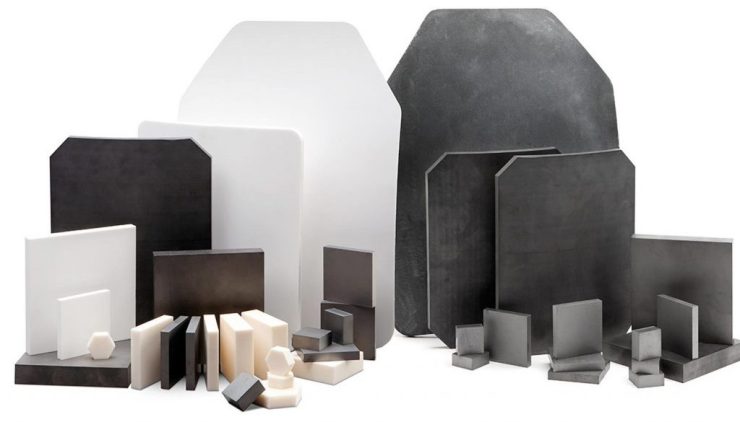
The commercially manufactured ceramics for armor include materials such as boron carbide, aluminum oxide, silicon carbide, titanium boride, aluminium nitride, and Syndite (synthetic diamond composite). Boron carbide composites are primarily used for ceramic plates to protect against smaller projectiles, and are used in body armor and armored helicopters. Silicon carbide is primarily used to protect against larger projectiles.

Commercially, a variety of sintered, reaction-bonded and hot pressed ceramic materials are available, for example, Hexoloy® Silicon Carbide (SiC). Likewise common ceramic body armor components in the market are CeraShield™ High-Density Aluminum Oxides, CeraShield Silicon Carbides, and CeraShield Boron Carbides.

To know More about Ceramic Armor grab the chance and attend the forthcoming Conference : 5th International Conference on Advanced Material Research and Nanotechnology.

Dates of the Conference : May 22-23, 2019

Venue : Rome, Italy

For more Details : Advanced Materials 2019


WordPress: https://bit.ly/2HyNG3q
Blogger: https://bit.ly/2JTyTFV
Facebook: https://bit.ly/2LNOvba
Twitter : https://bit.ly/2t5iGDa

Wednesday, 21 November 2018

What is Ceramic Armor? – Advanced Materials 2019 Conference


Materials used in armor have come a long way since ancient times when hides and skins were first used to protect the body.

For many years, armors were produced using various metals and alloys. In modern times, these metal suits have given way to armors made from super strong synthetic fibers and super strong synthetic hard materials. The latest super-strong materials to be considered are ceramics.

Ceramic armor can be used to protect vehicles as well as individual personnel and dates back to 1918. Ceramics are known to be some of the of the hardest materials, and unlike materials such as Kevlar (which uses its fibers to “catch” the bullet), ceramics break the bullet. The strongest and lightest ceramic is boron carbide.

Ceramic plates or trauma plates are used as inserts in soft ballistic vests. It is hard enough to ensure that a bullet or other weapon is deflected, meaning the armor material pushes out on the bullet with nearly the same force with which the bullet pushes in, thus preventing the armor from being penetrated. Ceramic plates provided to the U.S. military are called Enhanced Small Arms Protective Inserts (ESAPI).

The downside to the use of ceramic is that it cannot sustain successive impacts without quickly losing some of its protective value. However, advanced ceramic technology has eliminated that problem by minimizing the size of the ceramic tiles to be as small as possible, with the matrix elements having a minimum practical thickness of about 1 in. (25 mm).

To know More about Ceramic Armor grab the chance and attend the forthcoming Conference: 5th International Conference on Advanced Material Research and Nanotechnology.

Dates of the Conference: May 22-23, 2019

Venue: Rome, Italy

For more Details: Advanced Materials 2019


WordPress: https://bit.ly/2HyNG3q 
Blogger: https://bit.ly/2JTyTFV 
Facebook: https://bit.ly/2LNOvba 
Twitter : https://bit.ly/2t5iGDa
Tuesday, 13 November 2018

Energy Storage: Solar Power- Advanced Materials 2019

Solar power is the future of energy storage, but it comes with a hefty price tag. As of 2014, solar energy accounts for less than one percent of electricity in the United States and it costs twice as much to produce compared to natural gas (National Center for Policy Analysis). Despite the costs associated with solar energy, the benefits are significant, including sustainability and low maintenance.

In an effort to accelerate solar power advancements, researchers are applying nanotechnology to solar energy. For example, nanoparticles “have been shown to enhance the absorption of light, increase the conversation of light to electricity, and provide better thermal storage and transport (National Nanotechnology Initiative).” With these advancements, nanotechnology has the potential to improve solar energy efficiency and reduce costs.

As today’s researchers continue to make significant advancements across a range of industries, the nanotechnology field is expected to make great strides in the near and long-term future. STEM-focused universities that offer nanotechnology degree programs provide students the opportunity to gain real-world experience and hands-on applied research, enabling the next wave of nanotechnology advancements.

To know More about nanotechnology grab the chance and attend the forthcoming Conference : 5th International Conference on Advanced Material Research and Nanotechnology.

Dates of the Conference : May 22-23, 2019

Venue : Rome, Italy

For more Details : Advanced Materials 2019

Follow us on : WordPress, Facebook, Google Plus, Linked In, Blogger

WordPress: https://bit.ly/2HyNG3q
Blogger: https://bit.ly/2JTyTFV
Facebook: https://bit.ly/2LNOvba
Twitter : https://bit.ly/2t5iGDa

Organizing Committee Member - Material Science 2019

We embrace our Organizing Committee Member Dr. Mohammad Hassan for our forthcoming Gathering on Material Science 2019 which fitting to b...