Monday, 16 July 2018

Nano-Electronic Devices and Materials

mbe_2012_2_2
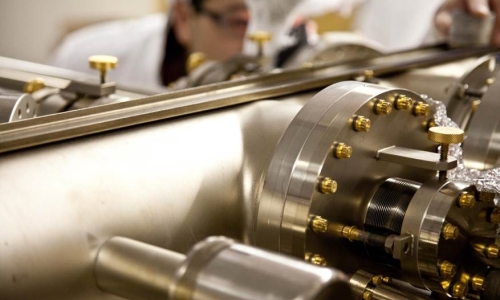
Investigation of semiconductors and devices for optoelectronic applications including photovoltaic energy conversion and optical communications. Development of thin film transistors for electronic displays and imaging systems.

APPLICATIONS OF HIGH TEMPERATURE SUPERCONDUCTORS

Formation of ultra thin high critical temperature superconductor films by vacuum deposition methods. Study of optoelectronic properties of thin films for optical detection applications.

NANO MATERIALS AND DEVICES

Study of organic materials for nano junctions, transistor and light emitting devices. Development of nano devices by e-beam writing.
  • Molecular beam epitaxial growth of nanoscale semiconductors for electronic, photonic, and biochemical sensing applications
  • III-nitride nanowire heterostructures, including nanowires, quantum dots, and micro/nanotubes
  • Nanowire-based nanophotonic devices, including light emitting diodes, lasers, solar cells, thermoelectric devices, and photodetectors
  • Artificial  photosynthesis on nanowire arrays, including one-step solar-to-hydrogen conversion and photoreduction of carbon dioxide
  • Covalent and non-covalent functionalization of graphene field effect transistors for gas sensing, pH sensing, bolometry, thermoelectrics and other applications.
  • Graphene, graphene/boron-nitride heterostructures and suspended graphene for microwave electronics and other applications
  • Semiconductor heterostructures for cryo-refrigeration and spin caloritronics
  • Graphene/nano-particle composites for applications such as Li-ion battery anodes
To know More about Nanotechnology in Solar Cells grab the chance and attend the forthcoming Conference : 5th International Conference on Advanced Material Research and Nanotechnology.
Dates of the Conference : September 17-18, 2018

Venue : Berlin, Germany

For more Details :  Advanced Materials 2018


  1. WordPress: https://bit.ly/2HyNG3q
  2. Blogger: https://bit.ly/2JTyTFV
  3. Facebook: https://bit.ly/2LNOvba
  4. Twitter : https://bit.ly/2t5iGDa

Thursday, 12 July 2018

Nanotechnology in Medicine Application: Drug Delivery

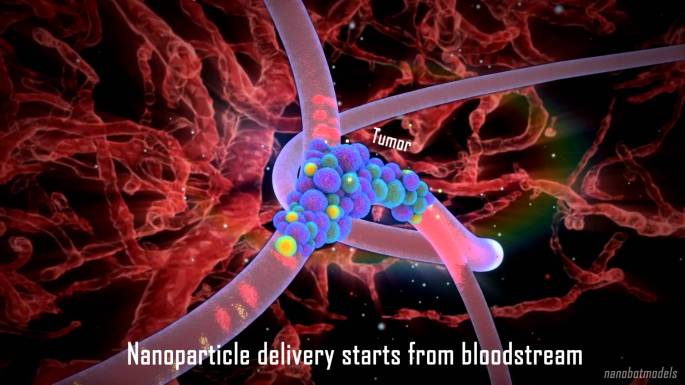
One application of nanotechnology in medicine currently being developed involves employing nanoparticles to deliver drugs, heat, light or other substances to specific types of cells (such as cancer cells). Particles are engineered so that they are attracted to diseased cells, which allows direct treatment of those cells. This technique reduces damage to healthy cells in the body and allows for earlier detection of disease.
maxresdefault
For example, nanoparticles that deliver chemotherapy drugs directly to cancer cells are under development. Tests are in progress for targeted delivery of chemotherapy drugs and their final approval for their use with cancer patients is pending. One company, CytImmune has published the results of a Phase 1 Clinical Trial of their first targeted chemotherapy drug and another company, BIND Biosciences, has published preliminary results of a Phase 1 Clinical Trial for their first targeted chemotherapy drug and is proceeding with a Phase 2 Clinical Trial.
Researchers at Georgia State University are using nanoparticles in a influenza vaccine that targets a portion of the virus that is present in all influenza viruses. Their intent is to develop a vaccine that will work on all influenza viruses.
Researchers at the Wyss Institute are testing nanoparticles that release drugs when subjected to sheer force, such as occurs when passing through a section of artery that is mostly blocked by a clot. Lab tests on animals have shown that this method is effective in delivering drugs used to dissolve clots.The  Read more about their study here.
Researchers at the Houston Methodist Research Institute have demonstrated a targeted drug delivery method in mice using silicon nanoparticles that degrade inside a tumor, releasing polymer strands that form a nanoparticle containing the drug to be delivered. This polymer nanoparticle dissolves inside the cancer cell, delivering the drug to the cancer cell.
To know More about Nanotechnology in Solar Cells grab the chance and attend the forthcoming Conference : 5th International Conference on Advanced Material Research and Nanotechnology.
Dates of the Conference : September 17-18, 2018

Venue : Berlin, Germany

For more Details :  Advanced Materials 2018


  1. WordPress: https://bit.ly/2HyNG3q
  2. Blogger: https://bit.ly/2JTyTFV
  3. Facebook: https://bit.ly/2LNOvba
  4. Twitter : https://bit.ly/2t5iGDa

Wednesday, 11 July 2018

Nanotechnology in Solar Cells

How can nanotechnology improve solar cells
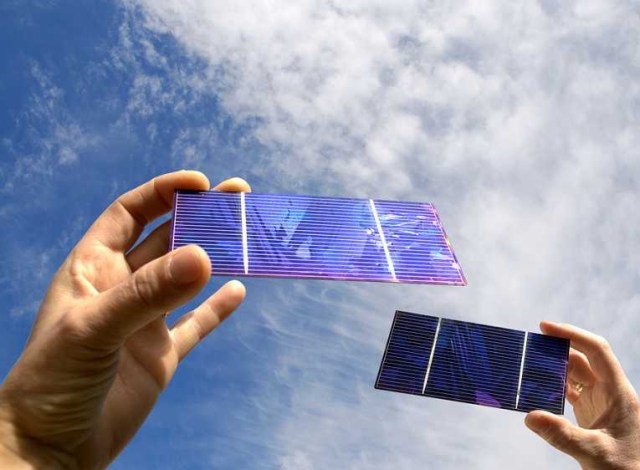
Using nanoparticles in the manufacture of solar cells has the following benefits:
Use-of-Nanotechnology-in-Solar-Energy-2
  • Reduced manufacturing costs as a result of using a low temperature process similar to printing instead of the high temperature vacuum deposition process typically used to produce conventional cells made with crystalline semiconductor material.
  • Reduced installation costs achieved by producing flexible rolls instead of rigid crystalline panels. Cells made from semiconductor thin films will also have this characteristic.
  • Currently available nanotechnology solar cells are not as efficient as traditional ones, however their lower cost offsets this. In the long term nanotechnology versions should both be lower cost and, using quantum dots, should be able to reach higher efficiency levels than conventional ones.
Solar Cells: Nanotechnology Applications under Development
Researchers at Michigan Technological University have developed a honeycomb like structure of graphene in which the graphene sheets are held apart by lithium carbonate. They have used this “3D graphene” to replace the platinum in a dye sensitized solar cell and achieved 7.8 percent conversion of sunlight to electricity.
Researchers at Los Alamos National Lab have demonstrated a solar cell that uses a copper indium selenide sulfide quantum dots. Unlike quantum dots containing lead or cadium the copper based quantum dot is non-toxc as well as low cost.
Researchers at MIT are studying solar cells made from single molecule thick sheets of graphene and materials such as molybdenum diselenide. They are predicting that this type of solar cells could produce up to 1000 times as much more power for a given weigh of material than conventional solar cells. They have completed computer modeling and are working on building the solar cells.
Researchers at MIT have developed a solar cell using graphene coated with zinc oxide nanowires. The researchers believe that this method will allow the production of low cost flexible solar cells at high enough efficiency to be competive.
 Solar Cells: Nanotechnology Company Directory
CompanyMaterials Used
NanosolarCopper-Indium-Diselenide semiconductor ink
Global PhotonicsOrganic solar cells
InnovalightSilicon nanocrystalline ink
Bloo Solar“Nano-cables” grown on a thin film material
EnSolNanocrystals embedded in a thin film material
Solarmer Energy
Nanoparticles in plastic solar cells
To know More about Nanotechnology in Solar Cells grab the chance and attend the forthcoming Conference : 5th International Conference on Advanced Material Research and Nanotechnology.
Dates of the Conference : September 17-18, 2018

Venue : Berlin, Germany

For more Details :  Advanced Materials 2018


  1. WordPress: https://bit.ly/2HyNG3q
  2. Blogger: https://bit.ly/2JTyTFV
  3. Facebook: https://bit.ly/2LNOvba
  4. Twitter : https://bit.ly/2t5iGDa

Tuesday, 10 July 2018

Student Ambassador Advanced Materials 2018

Advanced Materials 2018
Dates of the Conference : September 17-18, 2018

Venue : Berlin, Germany

For more Details :  Advanced Materials 2018


  1. WordPress: https://bit.ly/2HyNG3q
  2. Blogger: https://bit.ly/2JTyTFV
  3. Facebook: https://bit.ly/2LNOvba
  4. Twitter : https://bit.ly/2t5iGDa

Sunday, 8 July 2018

Nano-science, Physics & Chemistry of Advanced Materials

Nano Facts : 
ImageForArticle_4659(1)
  • The word nano is from the Greek word 'Nanos' meaning Dwarf. It is a prefix used to describe "one billionth" of something.
  • A nanometre (nm) is a billionth of a metre, or a millionth of a millimetre.
  • 1 nanometre is about 8 times the radius of an atom and 100 times smaller than a bacterial cell. At this scale matter reacts differently, for example, a material's melting point may change or it may become more reactive.
  • A human hair is 80,000 nm in diameter.
  • Nanoscience works on a scale 1000 times smaller than anything that can be seen with an optical microscope.
  • We are already surrounded by billions of nano-particles, such as wind borne sea salt and chemicals generated by oceanic plankton.
  • A new form of carbon with a cylindrical nanostructure - the nanotube - was discovered in 1991.
  • Nanotubes have novel properties including extraordinary strength and unique electrical properties.
  • These mechanical and electrical properties make nanotubes potentially useful in many applications from electronics to everyday items like clothes and sports gear
  • The discovery of another nanoscale carbon form, C60, called the buckyball, brought the 1996 Nobel Prize in Chemistry to Robert Curl, Sir Harold Kroto, and Richard Smalley. It started an avalanche of research into other nanoscale materials.
  • Nanotechnology is already applied commercially in products ranging from mobile phones, computer discs, tennis rackets and golf clubs to sunscreens and cosmetics.
  • L'Oreal have developed nanosize vesicles called nanosomes. They are used to transport active ingredients such as pure Vitamin E through the skin
  • Nanoscience is not just one science. It is a platform that includes biology, chemistry, physics, materials science and engineering.
  • Nanotechnology was first introduced in 1959 by Nobel Prize-winning physicist Richard Feynman. He proposed using normal-sized robots to construct smaller replicas of themselves and then using the new set to manufacture an even smaller set, and so on, until the molecular scale is reached.
To know More about Nanotechnology grab the chance and attend the forthcoming Conference : 5th International Conference on Advanced Material Research and Nanotechnology.

Dates of the Conference : September 17-18, 2018
 
Venue : Berlin, Germany
 
For more Details :  Advanced Materials 2018
 
  1. WordPress: https://bit.ly/2HyNG3q
  2. Blogger: https://bit.ly/2JTyTFV
  3. Facebook: https://bit.ly/2LNOvba
  4. Twitter : https://bit.ly/2t5iGDa

Monday, 2 July 2018

5th International Conference on Advanced Material Research and Nanotechnology

We Welcome #Speakers for the Upcoming Meeting on #AdvancedMaterials2018 to be held in #Berlin #Germany during #September 17-18, 2018. Join us and Explore the interesting topics on #AdvancedMaterials and #Nanotechnology For More Details : https://bit.ly/2kvE54v

Some Interesting Facts about Air Craft Composite Materials

WHY COMPOSITES?

Composite materials are most preferred in aircraft design. Reasons are
  • High strength to weight ratio
  • High tensile strength and resistance to compression
  • Saves Fuel consumption
  • Improve the efficiency and performance of aircraft.

FIRST COMMERCIAL AIRCRAFT

Boeing 787 Dreamliner is the first commercial aircraft whose major structural components are made up of composites rather than aluminium alloys. Boeing 787 Dreamliner is going to use carbon laminates and carbon sandwich composites.

TYPES OF AIRCRAFT COMPOSITE MATERIALS

Aircraft mostly use carbon fiber, glass fiber and Kevlar fiber.
types-of-aircraft-composite-materials-used

PROPERTIES OF CARBON FIBER

  • Diameter is similar to 8 mm.
  • Strength is greater than 5 GPa due to highly aligned planes of graphite.
  • Stiffness is similar to 160-700 GPa, but 230-400 GPa is usual.
  • Good in fatigue and non susceptible to degradation by chemicals.
  • The Fibers bond well with surface treatment.

PROPERTIES OF CARBON FIBER

  • Diameter is similar to 8mm.
  • Strength is greater than 5GPa due to highly aligned planes of graphite.
  • Stiffness is similar to 160-700 GPa, but 230-400 GPa is usual.
  • Good in fatigue and non susceptible to degradation by chemicals.
  • The Fibers bond well with surface treatment.

PROPERTIES OF GLASS FIBER

  • Diameter is similar to 10mm.
  • Strength is greater than 3GPa due to defects in small diameter fiber.
  • Stiffness is similar to 70 GPA for cheaper E glass.
  • Susceptible to environmental attack and fatigue.
  • The fibers need silent treatment to bond well to matrix.

PROPERTIES OF KEVLAR FIBER

  • Stiffness is similar to 125 GPA in tension.
  • Strength is greater than 3GPa because of highly aligned linear polymer chains.
  • Much weaker and less stiff in compression as linear polymer chains comes apart.
  • Susceptible to degradation by UV light and moisture.
  • The fibers do not bond well at all, leading to a weak fiber/matrix interface.

TESTING OF COMPOSITE MATERIALS

Composites are tested by mechanical stress test on various parts. Firstly the test goes on small scale model then progressively moved to larger parts of the structure and finally to the full structure.
Hydraulic machines are used to bend and twist composite material structures to check the worst expected conditions in real fights.

PROPERTIES OF AIRCRAFT COMPOSITE MATERIALS

  • Composites have fairly very low electrical conductivity. That’s why a copper mesh is always integrated in aerospace laminates to protect aircraft from lightning strike damage.
  • Composites have relatively low thermal conductivity and thermal expansion coefficients in and out of the aircraft.
  • Composites have high strength to weight ratio, which is crucial for aircraft design.
  • Composites are very damaging most tolerant.
  • Composites are not very resistant to mechanical wear effects. That’s why External surfaces are treated with specific paints.

EFFECTS OF ENVIRONMENT ON COMPOSITES

Composite materials have a lighter weight and similar strength as bulky materials. It is very easy to transport lighter composite materials.
Composites are more corrosion resistant, which means the pet will live longer. Traditionally produced composites are made from petroleum based fibers and resins, and are non biodegradable by nature.
This is a serious problem and scientists are doing research to make composites biodegradable.
There is another method which is used for sustainable development of aircraft composite materials i.e. Reuse. Aircraft manufacturing industries use decommissioned airplane composites for new one.

COMPOSITES PARTS USED IN BOEING 767

aircraft-composite-materials-of-boeing-767

ADVANTAGES OF COMPOSITE MATERIALS

  • Composites reduced the overall structural member weight by 20-50%.
  • Composites are very corrosion and fatigue resistance.
  • Composites have tolerable mechanical properties.
  • Composites have lower assembly costs because it requires very few fasteners, bolts etc..
 DISADVANTAGES OF COMPOSITE MATERIALS
  • Composites have high recurring costs.
  • Composites are higher non recurring costs.
  • Composites have higher material costs.
  • Composites have very expensive repairs and maintenance.
  • Composites needed isolation to prevent adjacent aluminium part galvanic corrosion.

FUTURE COMPOSITE MATERIALS

This type of lightweight, high temperature composite materials is in the research process at NASA for use in aircraft parts.
This future composite exhibits high ductility, allowing stretching of a fire up to 140% of its normal length. This is also under research process.
This future composite material can be stainless steel constructed with inspiration from composites and Nano tech fibers and plywood. This is again under research process.
Closing Lines
Aircraft composite materials have high strength to weight ratio and lower electrical conductivity, thermal conductivity, thermal expansion coefficients and assembly cost.
There are some limitations of composites. Scientists are doing deep research on more advance composites which should be biodegradable, low recurring costs and easily available.
To know More about Composites grab the chance and attend the forthcoming Conference : 5th International Conference on Advanced Material Research and Nanotechnology.
Dates of the Conference : September 17-18, 2018

Venue : Berlin, Germany

For more Details :  Advanced Materials 2018

  1. WordPress: https://bit.ly/2HyNG3q
  2. Blogger: https://bit.ly/2JTyTFV
  3. Facebook: https://bit.ly/2LNOvba
  4. Twitter : https://bit.ly/2t5iGDa

Organizing Committee Member - Material Science 2019

We embrace our Organizing Committee Member Dr. Mohammad Hassan for our forthcoming Gathering on Material Science 2019 which fitting to b...